The Badami cave temples are a complex of Buddhist, Hindu and Jain cave temples located in Badami, a town in the Bagalkot district in northern part of Karnataka, India. The caves are important examples of Indian rock-cut architecture, especially Badami Chalukya architecture, and the earliest date from the 6th century.
Nataraja Carving
Mahisasura Mardini Carving
Harihara Carving
Ardhanareshwara Carving
Major Attractions in Badami:
- Badami Cave Temples (Caves 1–4):
- Cave 1 (Shiva): Dedicated to Lord Shiva, featuring a striking 18-armed Nataraja sculpture.
- Cave 2 (Vishnu): Dedicated to Vishnu, with carvings of Trivikrama and Varaha.
- Cave 3 (Vishnu): The largest and most elaborate cave, dedicated to Vishnu, dating back to 578 AD, adorned with detailed sculptures and ancient paintings.
- Cave 4 (Jain): Dedicated to Jain Tirthankaras, featuring a statue of Mahavira.
- Agastya Lake: A historic water tank surrounded by the caves and temples, offering a scenic spot for photography.
- Bhuthanatha Temples: A group of temples made of red sandstone, located on the eastern side of Agastya Lake.
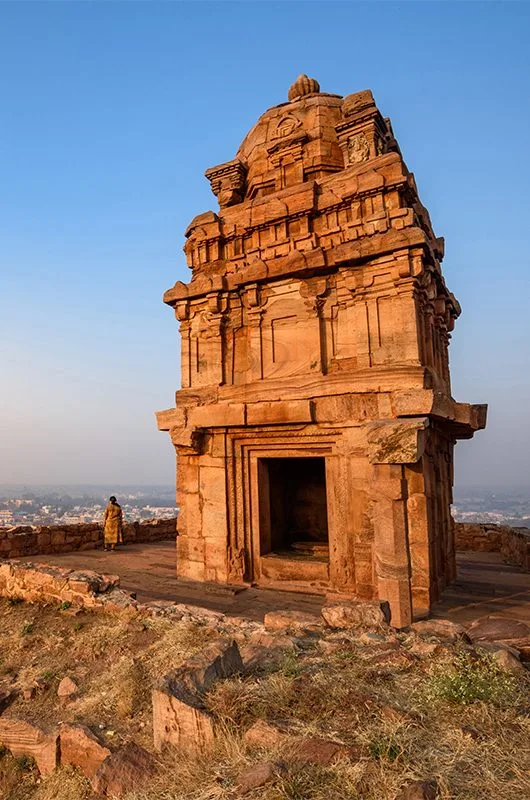
- Badami Fort & Upper Shivalaya: Located on top of the hill, this fort offers panoramic views of the town and houses ancient structures like the Malegitti Shivalaya.
- Archaeological Museum: Located near the lake, it showcases sculptures and artifacts found in the region.
- Aihole and Pattadakal: Located close by, these sites are often visited together with Badami for their significant Chalukyan architecture